Turn your parking spots into a revenue stream.
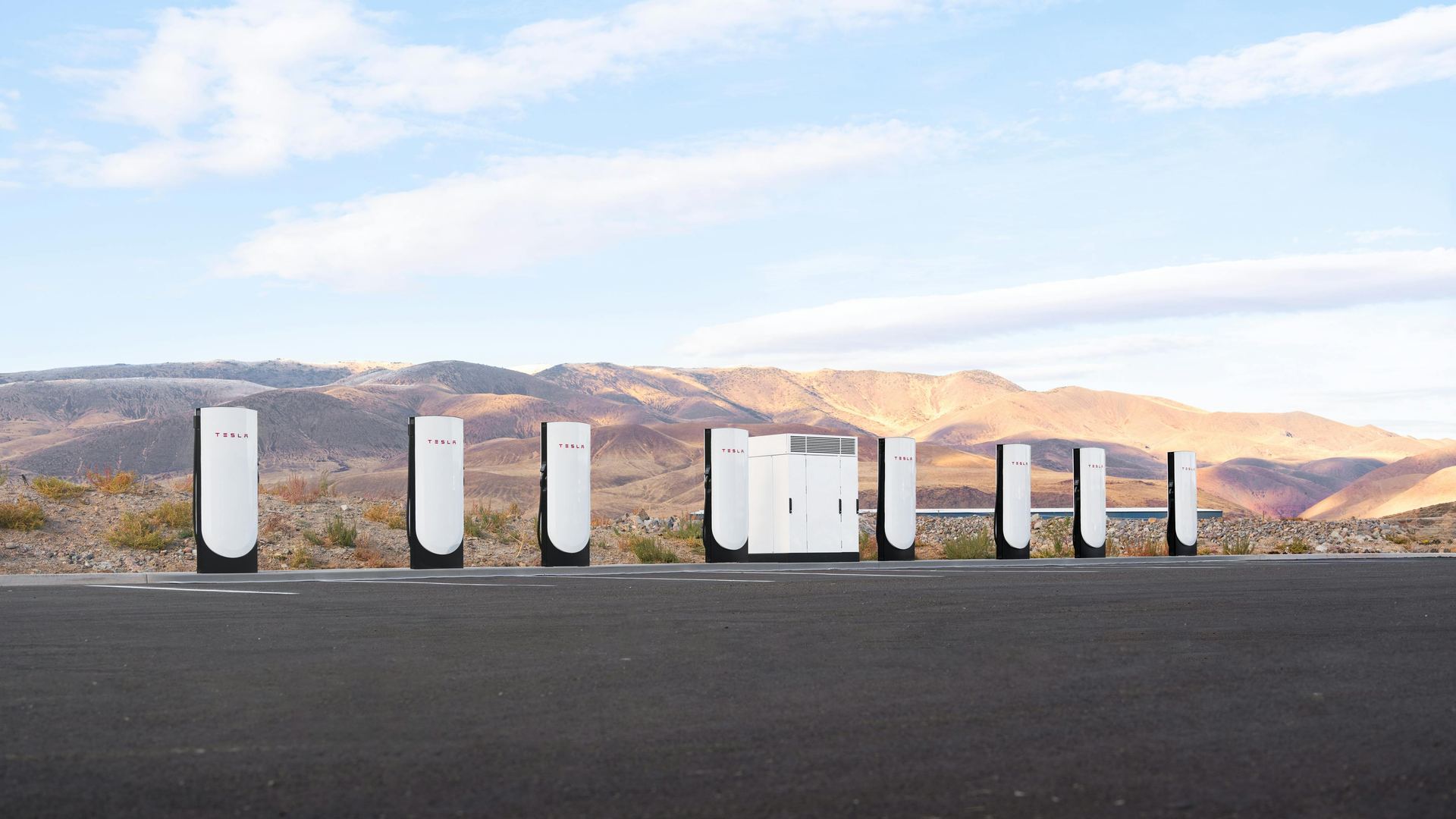
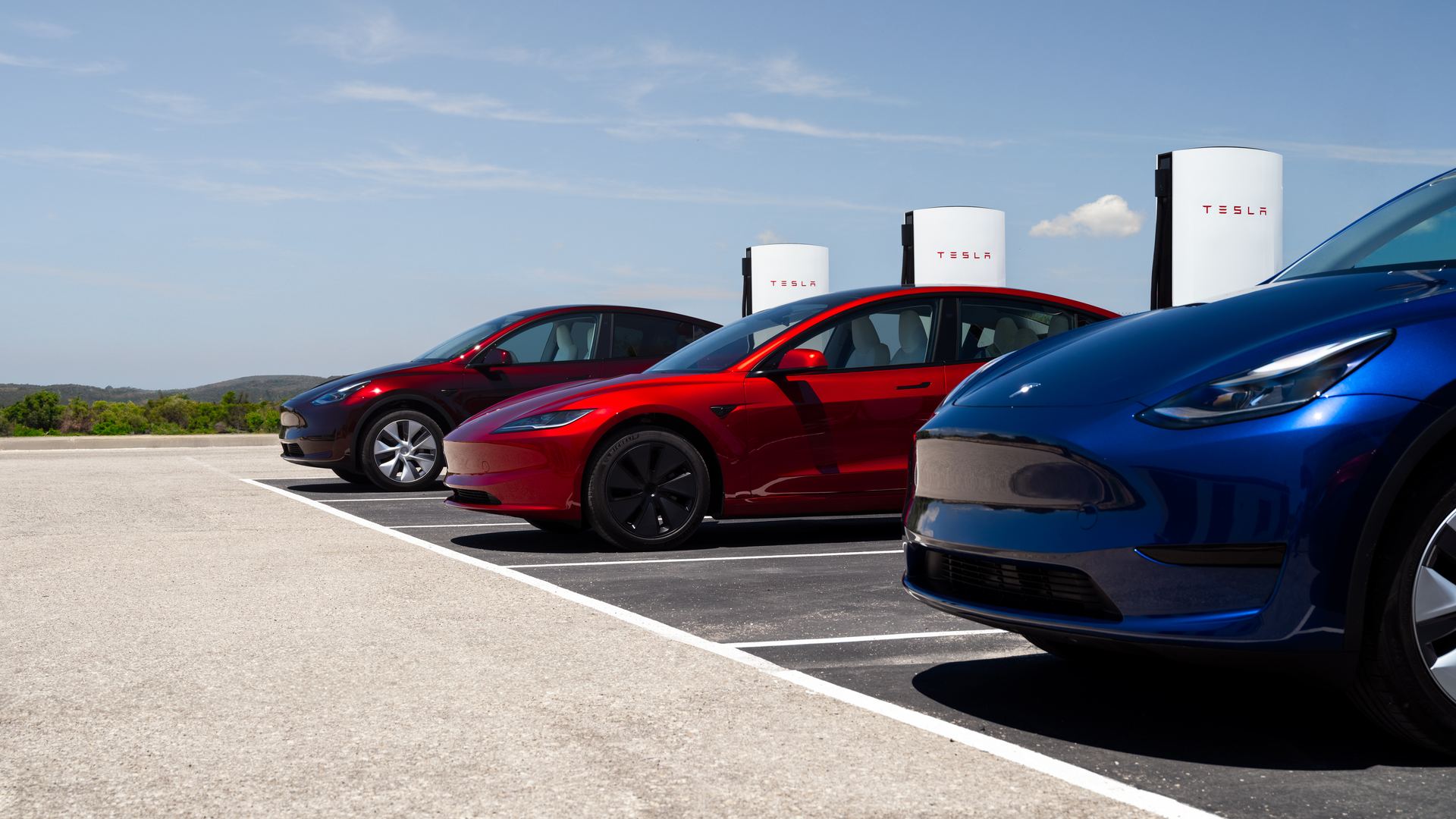
Those stalls earn nothing today. Host a Tesla Supercharger and they generate charging revenue, pull in drivers who spend on site, and put your property in every Tesla’s navigation. You own the site and set the price. Tesla runs the network. Bullet EV builds it.
A Supercharger does not just sell electricity.
It changes who shows up. Tesla surveyed drivers at a large national retailer hosting Superchargers, and the pattern was not subtle.
What they spend while charging
- $10–5040%
- $50–10028%
- $100–25013%
- $1–104%
- Nothing15%
Two in five spend $50 or more per visit. Source: Tesla Supercharger for Business, survey at a large national retailer. Revenue, utilization and payback vary by location, pricing, electricity cost, utility requirements and site conditions.
Who does what
Tesla splits a host site into ten areas. It owns seven of them. You own pricing, branding and everyday site upkeep — and the installation, which is the piece Bullet EV takes off your plate.
You, the site host
- Provide the location and dedicated stalls
- Own the charging equipment
- Set the price drivers pay per kWh
- Collect the charging revenue
Tesla
- Lists the site in every Tesla’s navigation
- Runs the software, payments and driver support
- Covers network operations and maintenance for a per-kWh services fee
- Keeps the network at 99.95% uptime (Tesla-reported, 2024)
Bullet EV
- Site evaluation and custom ROI report
- Design, permitting and utility coordination
- Construction, commissioning and activation
- Incentive research and applications
One fee. Tesla handles the rest.
Everything below is part of the Tesla Supercharger for Business package, charged at $0.10 per kWh delivered. There is no separate software subscription, maintenance contract or payment-processing bill — Tesla operates it all, and the fee comes out of the revenue before it reaches you.
Uptime and warranty
97% uptime guarantee, 10+ year equipment warranty covering parts and labor, and annual preventative maintenance by Tesla technicians.
Trip Planner routing
Your site is added to Tesla Trip Planner and in-vehicle navigation. Host sites that join see roughly 3× the utilization.
Payments handled
Card processing fees and dispute resolution are absorbed by Tesla, then your revenue is paid out automatically on a set schedule.
Plug & Charge
Works from day one, and keeps working without connectivity. Billing resumes automatically once the site reconnects.
Live availability
Real-time stall occupancy, wait times and outage reporting so drivers are never routed to a full or down site.
Tesla for Business portal
Full session data, monthly usage reports, uptime insight and pricing controls, plus utility rate and tariff optimization.
Connectivity and updates
Tesla manages and pays for the site internet connection, and ships firmware and new features quarterly at no extra charge.
Tesla supplies the whole system.
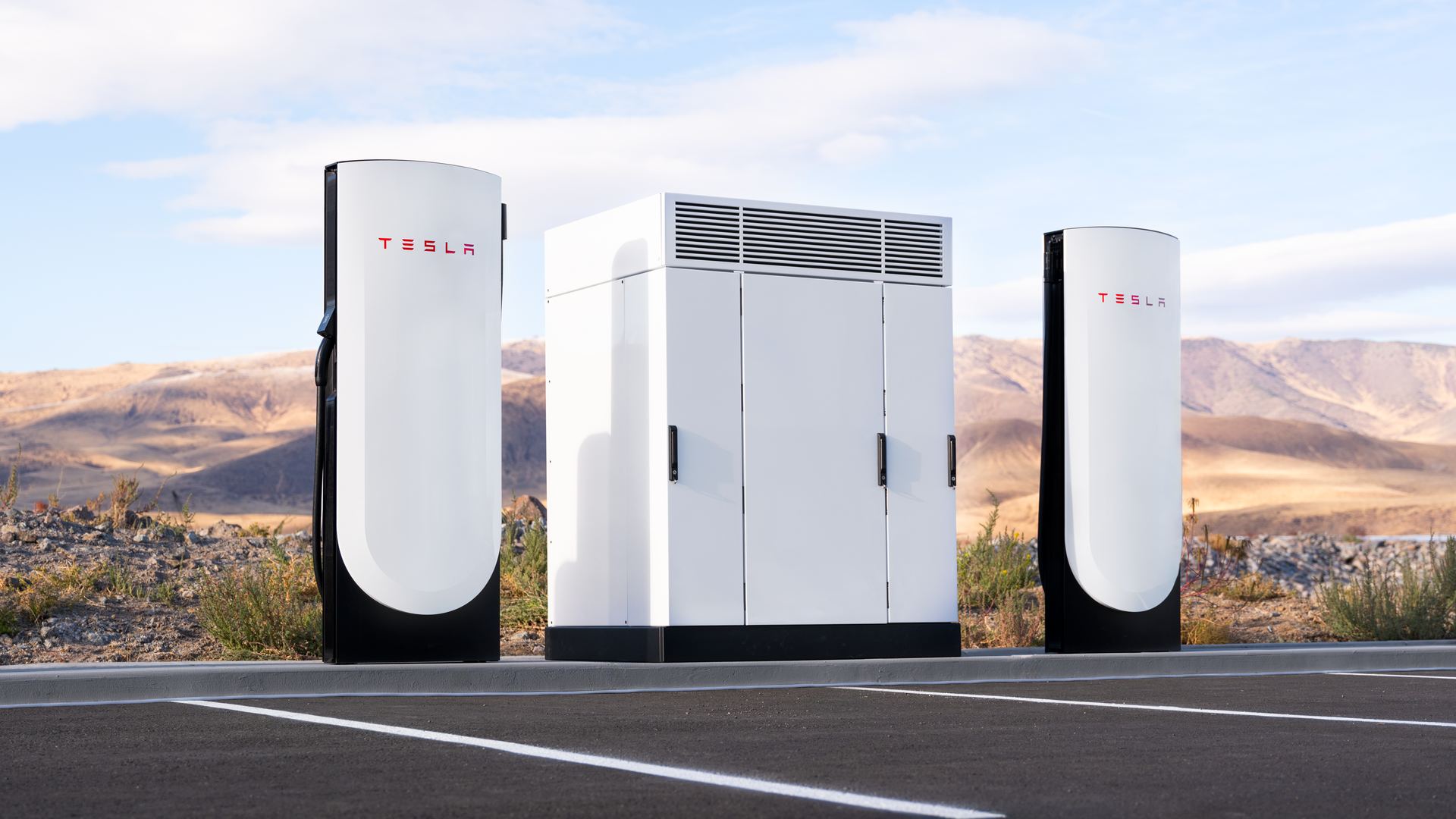
- Output500 kW per post on a V4 cabinet
- ConnectorsNACS, plus CCS1, CCS2 and GB/T
- MeteringRevenue-grade DC energy meter built in
- CableUniversal reach — any vehicle, any stall
- CabinetShares power across the site, sited away from the stalls
- FootprintCompact posts, no ventilation enclosure
What drives the return
- Pricing you control. Revenue is energy delivered times your price per kWh, net of electricity and Tesla’s services fee.
- Utilization that compounds. EV adoption keeps rising, so a site that starts at moderate utilization typically grows year over year.
- Foot traffic you would not otherwise get. The charging revenue is one line. Drivers who now stop at your property, and spend while they wait, are the other.
- Property value and tenancy. A Supercharger is an amenity that shows up in leasing conversations and in every Tesla’s navigation.
From qualifier to first charge
- 1Days
Qualify
Site qualifier, desktop review of traffic, parking, and power, and a first ROI estimate.
- 21–2 weeks
Model & propose
Custom ROI report, recommended charger count, pricing scenarios and a fixed-scope proposal.
- 3Weeks
Design & permit
Electrical and civil design, utility application, and permit submittals with the AHJ.
- 4Months
Utility & construction
Utility service work, trenching, conduit, switchgear, cabinets and posts. The utility is usually the long pole; we manage it.
- 5Days
Commission & activate
Testing, inspections, Tesla commissioning, and your site goes live in Tesla navigation.
What a site needs
Visibility and access
On or near a major corridor, with simple in-and-out for drivers following navigation.
8+ dedicated stalls
A contiguous block you can commit to charging, with room to maneuver.
Power
Existing utility capacity, or a realistic path to a new service. We run the application.
Lighting and upkeep
Well lit across every stall and pathway, and kept free of potholes and overgrowth.
24/7 access
No barriers, gates, time limits or seasonal closures.
Amenities within a minute
Restrooms, food or drink, seating and trash cans, reliably open through charging hours.
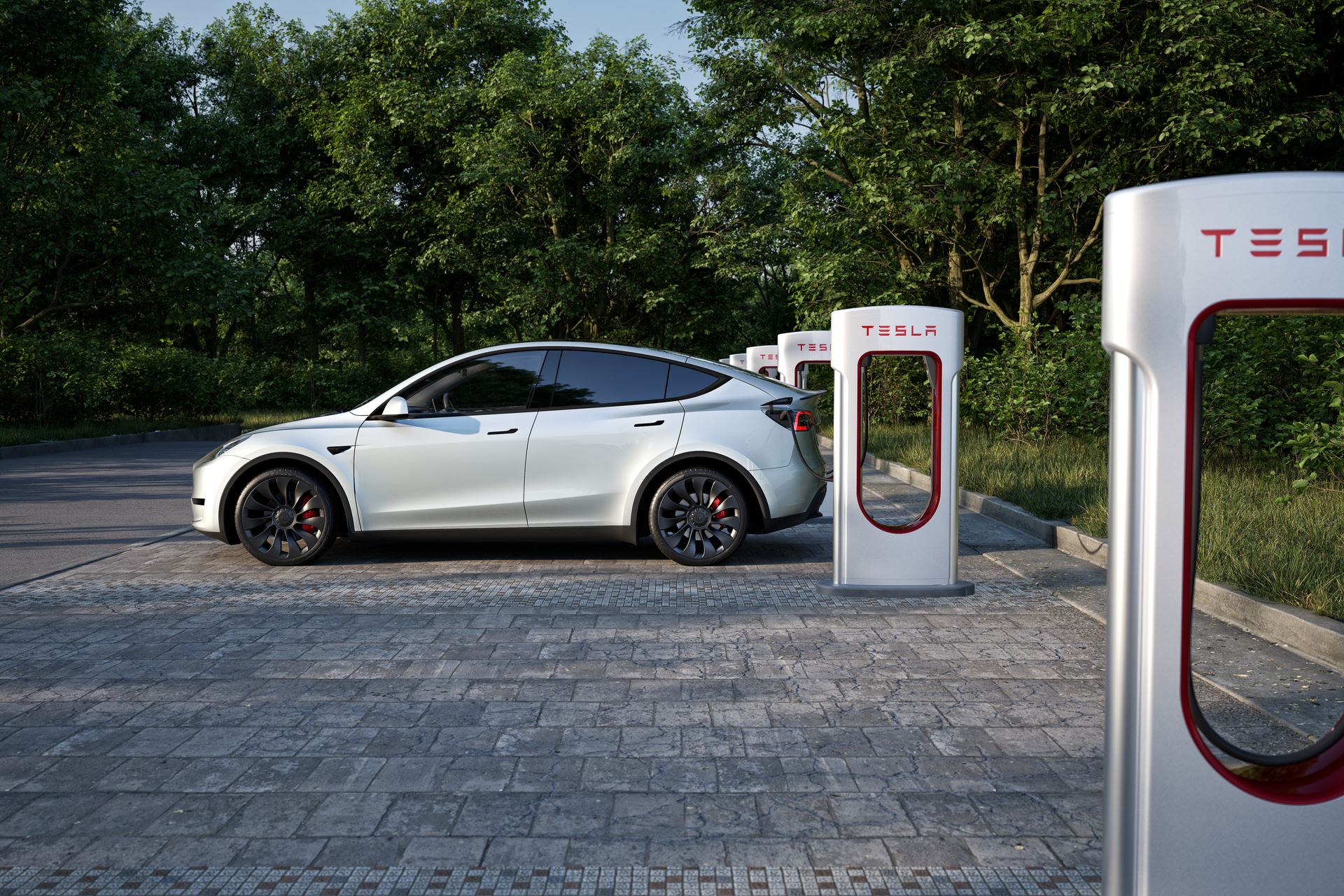
Supercharger sites we have built
Delivered end to end, from utility interface through turnover.
Supercharger hosting FAQ
How does hosting a Tesla Supercharger work?
You provide the location and own the charging equipment. Tesla lists the site in every Tesla’s navigation, handles the driver experience, payments and network operations for a per-kWh services fee, and you set the price drivers pay. Bullet EV designs, permits and builds the site and gets it activated on the Tesla network.
What makes a property a good Supercharger site?
Visibility from a major road, easy in-and-out access, parking you can dedicate to charging (typically 8 or more stalls), nearby amenities like food, restrooms and retail, and enough utility capacity to serve the site or a practical path to add it. Being near a highway corridor or a dense residential area helps, but strong local demand matters more than any single factor.
How many stalls do I need?
Tesla sites are typically built in groups of at least 4 posts. Most commercial sites we scope land between 8 and 16 stalls, and the ROI model on this site lets you compare scenarios.
What does a Supercharger site cost to install?
Turnkey installation typically ranges from roughly $35k to $65k per charger before equipment, depending on the site, distance to power, trenching and utility requirements. The ROI calculator shows how equipment, install and incentives combine into a project total.
Are there incentives for Supercharger installations?
Programs depend on the location, utility and installation date. The federal Section 30C credit is unavailable for property placed in service after June 30, 2026. We help research current state, local and utility programs; confirm eligibility with the program administrator and your tax advisor.
How long does a project take?
Site qualification and an ROI report take days. From signed agreement to an active site, most projects take several months, with utility service upgrades and permitting being the long poles. We manage both.
Who owns and maintains the equipment?
You own the site equipment. Tesla covers software, network operations, service and payment processing through its per-kWh services fee, so there is no separate operations vendor to manage.
Can non-Tesla vehicles use the chargers?
Tesla Superchargers use the North American Charging Standard (NACS), which most major automakers have adopted. Many non-Tesla EVs can already charge on the Supercharger network with an adapter or a native NACS port, and that share is growing every model year.
Ready to see what your property could earn?
Start with a free, no-obligation site assessment. If your site looks promising, we prepare a custom ROI report and walk you through it on a call.